
Santee Records Access by Custodian
The record keeper depends on who created the file. Santee City Clerk controls city business, while the San Diego County Assessor/Recorder/County Clerk controls deeds, liens, county certificates, fictitious business names, and older permanent holdings. The Superior Court keeps case files. State agencies maintain statewide business, license, custody, and vital systems. The table leads with the practical access point, because an online index does not always include the document image or every protected field.
| Record group | Keeper | Web access | Best available channel |
|---|---|---|---|
| Deeds, liens, recorded documents | San Diego County Recorder | Official Records Index, 1970 to present | Name or document search; kiosk for APN; paid copies |
| Property ownership and maps | San Diego County Assessor | APN, maps, and characteristics | Phone or kiosk for owner and address details |
| City permits and licenses | Santee departments | Tyler permitting portal | Portal, department contact, or city request |
| Trial court cases | San Diego Superior Court | Party index and some registers | Online index, courthouse terminal, mail, or copies |
| Birth, death, and marriage | County Recorder, HHSA, or CDPH | Request pages, not a broad name index | Authorized or informational certified copy |
| Jail and state custody | County Sheriff or CDCR | Official custody lookups | Online current-custody search |
California law does not make every government-held detail open. Sealed matters, juvenile files, protected voter fields, driver data, and confidential vital information remain restricted. A remote court result can also be narrower than the file available at a public courthouse terminal. Treat “indexed,” “viewable,” and “available as a certified copy” as three distinct levels of access.
Where Santee Records Actually Sit
Santee is a city, not the San Diego County seat. That fact explains why most person-linked public records are not held at City Hall. The city produces council, permit, code, license, and administrative files. County government records land ownership, local vital events, fictitious names, taxes, and trial cases. California supplies the statewide layer. ZIP or postal identity does not settle which agency has a file, especially near San Diego, El Cajon, Lakeside, county land, MCAS Miramar, and Eucalyptus Hills.
Use the event and the responsible agency, not the mailing label, to choose a custodian. A permit issued by Santee belongs with the city. A deed for a parcel inside Santee still belongs with the county Recorder. A California license remains a state record. This geographic split prevents many false starts and explains why the same person may appear in several systems without any one portal offering a complete profile.
Note: Confirm a parcel’s city boundary before assuming a Santee mailing address means the city issued its permit or code file.
Santee Recorder Index Search Fields
The San Diego County Official Records Index covers the online grantor-grantee index from 1970 to the present. A grantor transfers an interest; a grantee receives it. Searchers can use a person or organization name, a document number, or a recording date range. The index is a finding aid, not the same as the recorded image. Images and certified copies may require an order, while some documents can be viewed through county kiosks.
| Search control | Use | Santee-specific note |
|---|---|---|
| Grantor or grantee name | Find deeds, liens, and other indexed instruments | Try full forms for prefixes, suffixes, trusts, and business names |
| Document number | Open a known index entry | Owner Alert messages include this number |
| Recording range | Limit results by time | Online coverage begins in 1970 |
| APN | Parcel-based search | Available only at in-person kiosks after December 9, 2024 |
The Recorder no longer abbreviates words in the grantor-grantee index. Names such as “St John” or “Van de Kamp,” and trust or company names, need careful formatting. Search broad first, then add given names or dates. Older official records should be routed to the County Archives rather than forced into an index whose stated web coverage begins in 1970.
Santee APN Access Changed
A major access change took effect on December 9, 2024. San Diego County removed Assessor Parcel Number searching from the web-based Official Records Search after Assembly Bill 1785 and related California Public Records Act changes. APN searching still exists at ARCC public kiosks. A parcel number can still lead to maps and characteristics through Assessor property information, but it no longer supplies a one-step online route into recorded deeds and liens.
For owner and address information, call the Assessor Public Information Line at 619-236-3771 or use a county kiosk. Assessor maps show parcel numbers, lot lines, dimensions, acreage, street widths, adjoining parcels, and recorded map references. They do not show the street address or owner on the map itself. Property record copies cost $2 for the first page and $0.05 for each added page.
Counter advantage. A public kiosk can expose APN search and owner-address channels that the county’s free web pages do not provide.
Santee Permit Records by Address
Planning and building files can connect an address to applicants, project names, licensed professionals, and record types. County land-use files use tabs for a general search, street address, professional details, and record information. Search controls include record ID, project name, date range, license number, business name, street number, street name, and a long record-type list. City-issued permits instead route through Santee’s Tyler Self Service system or the responsible city department.
The official San Diego County Accela records search shows how the county separates address, professional, and project filters.
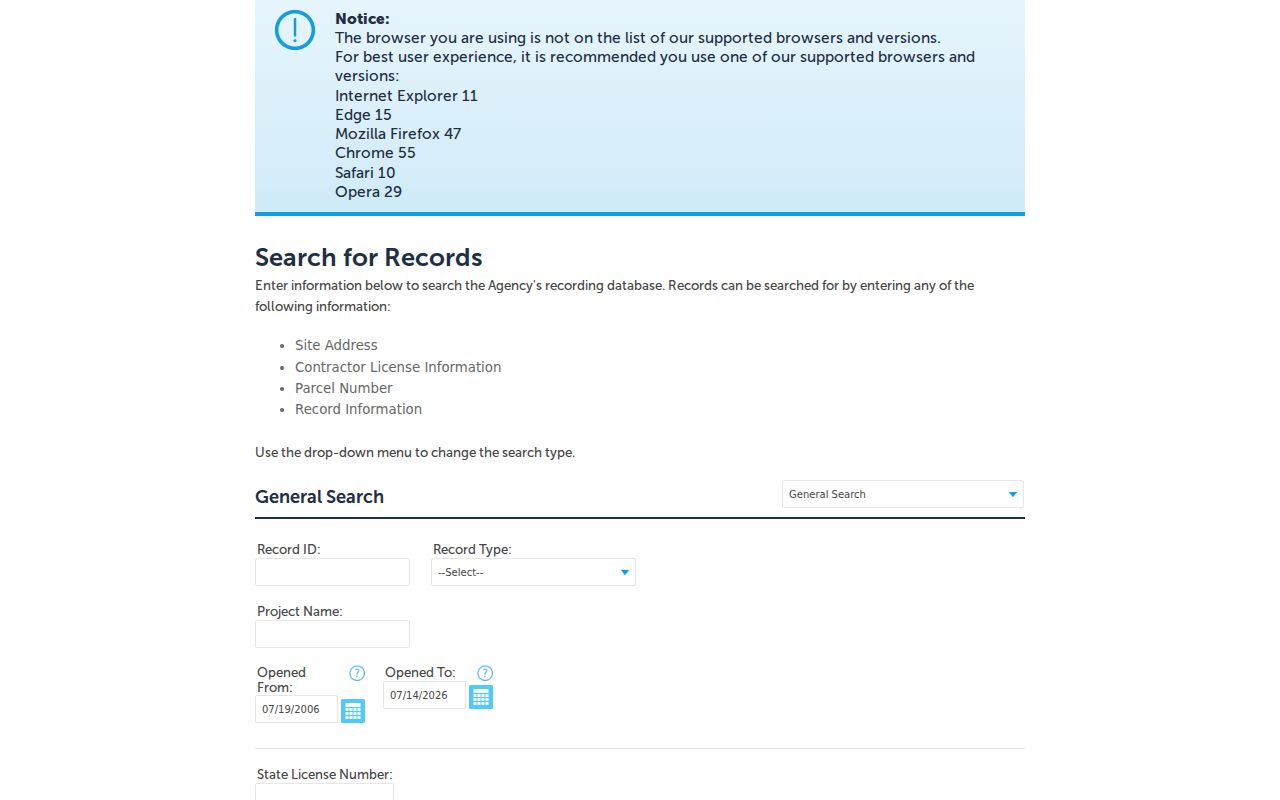
The screen is most useful when the site may fall outside Santee’s issuing jurisdiction or when a county planning case, enforcement file, map action, or permit is involved. If the public result is thin, request the identified file from the agency that issued its record number.
Santee Court Records Access Channels
The San Diego Superior Court Court Index searches civil, criminal, domestic, mental health, and probate matters by party name. Filters include case type, case location, party type for civil or domestic matters, filed-year range, last or business name, first name, and date of birth. Results identify the case title, number, location, type, filing date, and parties. Juvenile cases and infractions are not included, and some older limited civil or misdemeanor material may be on microfilm.
The court’s online case-search instructions distinguish a name index result from the underlying file.
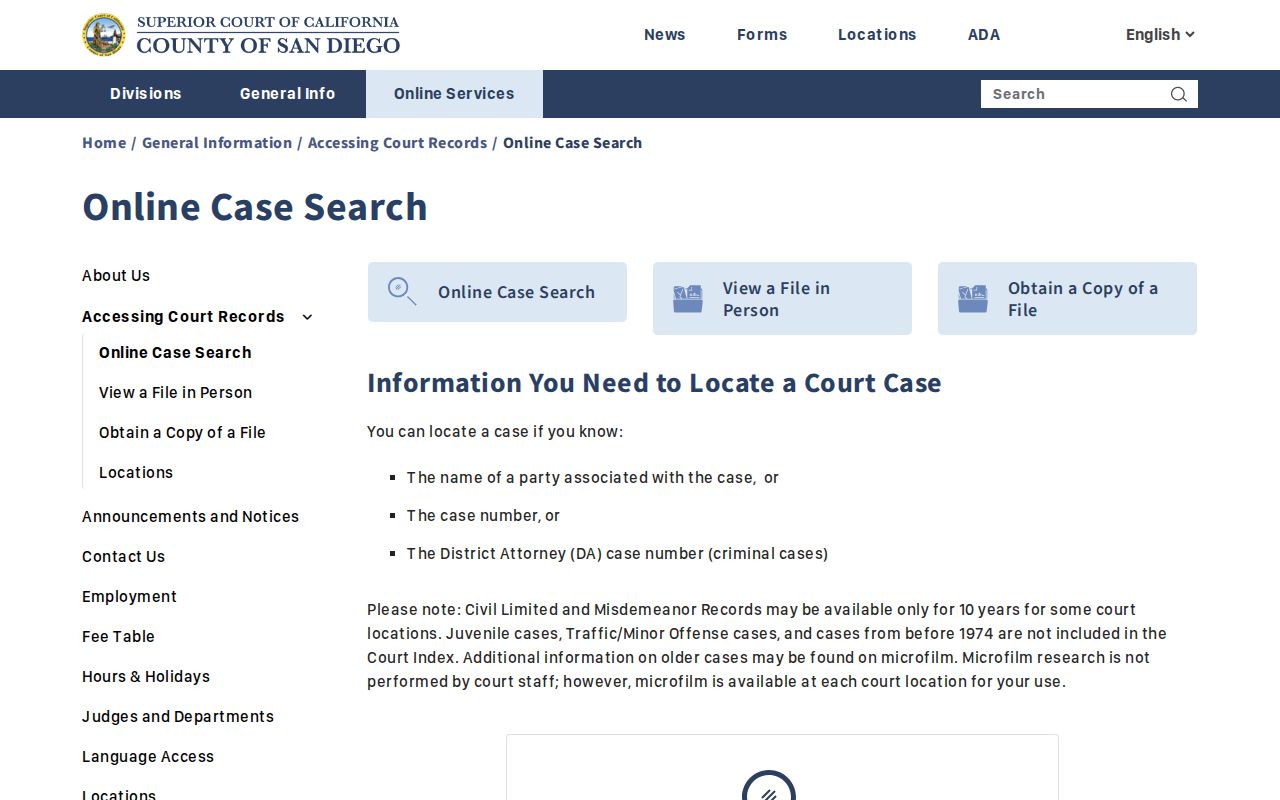
Criminal documents must be viewed at the courthouse where the matter was heard or ordered by mail. Public terminals can show electronic records that are not remotely available. The court’s copy channel lists regular copies at $0.50 per page, with some requests taking at least two court days. Judicial administrative records use a separate rule 10.500 request process, not the case-file route.
Santee Vital Record Copy Rules
San Diego County Recorder issues certified birth and death copies for county events and marriage copies when the license was issued and registered in San Diego County. HHSA keeps current and prior-year records, while California Department of Public Health provides a statewide route. The official sources do not state a simple number of years after which modern certificates become fully open. California instead distinguishes authorized and informational copies.
The county birth certificate application cites Health and Safety Code section 103526(c). An authorized copy is limited to listed eligible people. Other requesters may receive an informational certified copy marked as not valid to establish identity. The application lists $34 per birth certificate, and state vital fees changed on January 1, 2026 under AB 64. A mail request requires applicant details, certificate facts, payment, and, when needed, the sworn statement and notary step.
Historical research takes another route. The San Diego County Archives, located in Santee at 10144 Mission Gorge Road, preserves permanent official records, maps, and historic vital material. Its collections overview spans 1848 through 1959, with most holdings from 1873 through 1931.
Santee Public Records Offices
Three custodians handle the main access routes. The city clerk receives city-level requests. The county Recorder and Assessor control most land and county record channels. The Superior Court controls case files and has a separate contact for judicial administrative material. Use the office cards to keep those systems distinct.
Santee City Clerk
City administrative, council, and local department records
619-258-4100
County Recorder and Clerk
Deeds, liens, FBN records, county vital copies, and archives
Assessor information: 619-236-3771
San Diego Superior Court
Case files, court indexes, and judicial administrative records
Administrative records: 619-844-2233
Note: A court administrative request does not replace the courthouse, mail, or copy process for a specific case file.
Santee Custody and Registry Records
The San Diego Sheriff’s Who’s In Jail system covers county custody. Detail pages include case and charge information; “CL” means charge class and “ROC” means reason on calendar. State custody belongs in CDCR CIRIS, whose results can include name, CDCR number, age, present location, commitment counties, admission date, and parole hearing details. Sheriff crime, arrest, and accident reports are not the same as jail entries. Those requests go through the Sheriff Public Records Center, the station that responded, or the Records and ID service form.
The official California Megan’s Law website requires users to pass its legal notice before searching the registry.
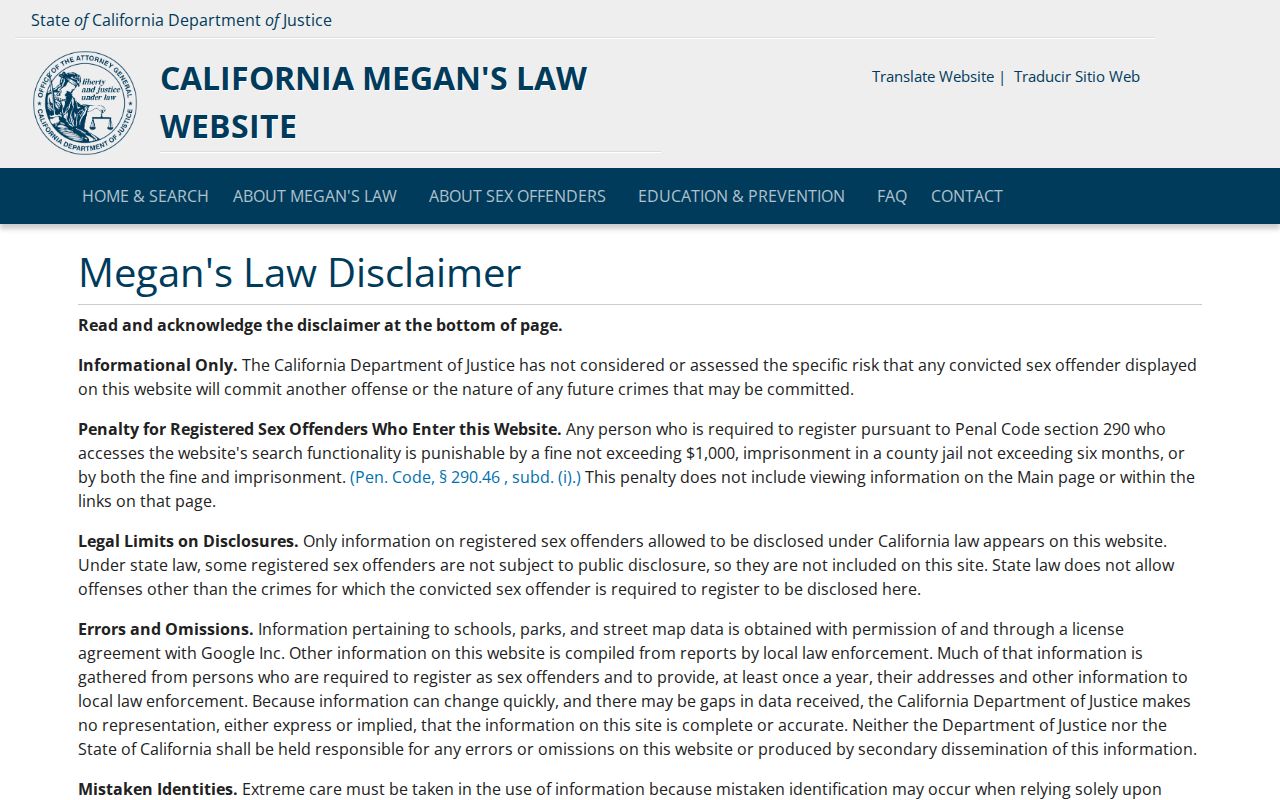
The registry is updated daily and supports name, address, and radius searching under Penal Code section 290.46. Its terms matter. The statute restricts misuse, and the service is a focused public-safety source rather than a general directory.
Santee Business Record Systems
Business identity is spread across four levels. Santee keeps local licenses and permit files. The County Clerk holds fictitious business name statements, which can be searched online, in person, or by mail. Its results show business names, a transaction item ID, document number, filed date, and expiration date. A statement must be filed within 40 days after a business begins using a fictitious name, and the filing itself does not grant exclusive rights to that name.
California’s bizfile business search covers corporations, limited liability companies, limited partnerships, and public filing images. The Department of Consumer Affairs advanced search accepts person name, business name, license number, and license type, then reports current or expired status and board actions where applicable. These sources identify the agency record behind a business, but each covers a different legal role.
Santee Records Closed or Redacted
Open-record law begins with agency records, then applies exemptions. Courts may seal a case or restrict remote access. Vital offices protect identity fields and limit authorized certificates. Voter information is not a general public list. Driver records fall under federal and state privacy rules. Recorder images, sheriff material, and code files may omit Social Security numbers, signatures, medical details, protected addresses, victim information, juvenile data, or privileged investigative material.
- Index
- A list that points to a record, often by name, date, number, or filing type.
- Image
- The scanned or electronic document itself, which may have a separate access fee or limit.
- Certified copy
- An official copy authenticated by the custodian for a formal use.
- Custodian
- The agency or office responsible for keeping and releasing the record.
- Exemption
- A legal reason an agency may withhold a record or redact part of it.
California Safe at Home can substitute a protected mailing address for eligible participants. Commercial data deletion is separate: the statewide DROP system begins imposing deletion duties on registered data brokers on August 1, 2026, but it does not erase official government records that an agency must retain.
Request Santee Public Records
The California Public Records Act, Government Code section 7920.000 et seq., is the fallback when a Santee or county administrative file is not posted. Agencies generally determine within 10 days whether responsive, disclosable records exist, subject to an extension for unusual circumstances. A focused request works best. State the department, record type, date range, address, parcel, business name, permit number, or other known identifier. Agencies may charge direct duplication costs and may redact exempt details.
- Choose the custodian. Send city files to Santee, deeds to the Recorder, case files to the court, and state records to the responsible California agency.
- Check the index and counter options. A free search, phone line, public kiosk, or courthouse terminal may answer the request faster.
- Describe the file precisely. Give names, dates, addresses, record numbers, and the department likely to hold it.
- Ask for the preferred form. State whether inspection, an electronic copy, a paper copy, or certification is needed.
- Review the response. Narrow an overly broad request, ask which exemption supports a redaction, or correct the custodian if the record was routed elsewhere.
Lawful personal use. Use Santee records for legitimate personal, family, civic, safety, or property research. Never use an address or identity detail to stalk, harass, threaten, or harm anyone.